
Understanding Preservation Rhinoplasty: Science and Technique
An educational overview of preservation rhinoplasty techniques and how Dr. Teoman Dogan's Teorhinoplasty approach advances the field.
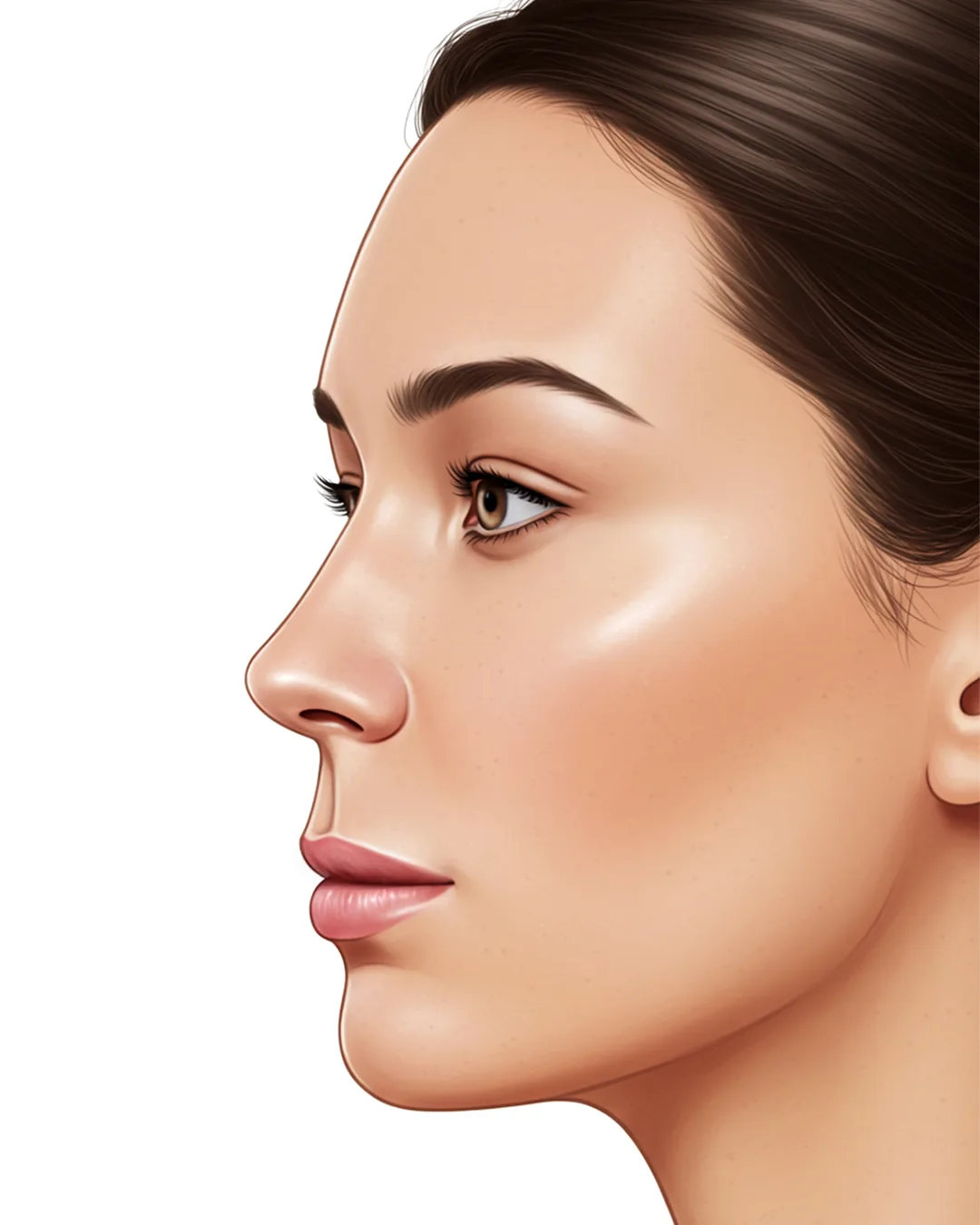
The Evolution of Rhinoplasty
Rhinoplasty has undergone a significant evolution over the past several decades. Early techniques focused primarily on removal — taking away cartilage and bone to achieve a desired shape. While these methods could produce dramatic changes, they often led to complications over time: collapsed nasal structures, breathing difficulties, and an "operated" appearance that lacked natural harmony.
The paradigm shift toward preservation rhinoplasty represents a fundamental change in surgical philosophy: rather than removing and rebuilding, the surgeon preserves the nose's natural framework and reshapes it from within.
What is Preservation Rhinoplasty?
Preservation rhinoplasty is an umbrella term for techniques that prioritize maintaining the nose's native cartilage, bone, and ligament structures. The key principles include:
- Subperichondrial dissection — working beneath the natural tissue layers to access the nasal framework without disrupting the overlying soft tissue envelope
- Dorsal preservation — reducing a dorsal hump by pushing the nasal bones down ("let-down") rather than shaving them off from above
- Ligament preservation — maintaining the scroll area and other key ligaments that support the nasal tip and bridge
- Minimal cartilage removal — repositioning cartilage rather than excising it, preserving long-term structural support
These principles result in less tissue trauma, reduced post-operative swelling, faster recovery, and — critically — more predictable long-term results.
Dr. Dogan's Contribution: Teorhinoplasty
Dr. Teoman Dogan has been at the forefront of preservation rhinoplasty for over three decades. His Teorhinoplasty technique builds on the preservation principles outlined above while incorporating several refinements developed through his extensive clinical experience and academic research:
Complete Subperichondrial Dissection
Dr. Dogan's technique involves a meticulous dissection beneath the perichondrium — the thin membrane that envelops the nasal cartilage. This approach:
- Minimizes trauma to blood vessels, reducing bruising and swelling
- Preserves the natural tissue planes, allowing for more precise reshaping
- Maintains the structural connections between cartilage segments
Functional Integration
A distinguishing feature of Teorhinoplasty is the simultaneous attention to nasal function. Dr. Dogan addresses septal deviation, turbinate hypertrophy, and nasal valve collapse as integral parts of the procedure — not as afterthoughts. This integrated approach ensures that patients breathe better, not just look better.
Evidence-Based Refinement
With a Ph.D. in Anatomy and over 50 peer-reviewed publications, Dr. Dogan brings an academic rigor to his surgical practice. His technique is continuously refined based on clinical outcomes, patient feedback, and advances in the scientific understanding of nasal anatomy and healing.
Preservation vs. Traditional: Key Differences
| Aspect | Traditional Rhinoplasty | Preservation Rhinoplasty |
|---|---|---|
| Dorsal hump | Removed by shaving | Reduced by repositioning (let-down) |
| Cartilage | Frequently excised | Preserved and repositioned |
| Tissue dissection | Extensive, disrupts natural planes | Minimal, follows natural tissue layers |
| Post-op swelling | Significant, prolonged | Reduced, faster resolution |
| Long-term stability | Risk of collapse over years | Better structural integrity |
| Natural appearance | Can look "surgical" | Tends to look more natural |
The Role of Research
Preservation rhinoplasty is supported by a growing body of clinical evidence. Studies have demonstrated:
- Reduced revision rates compared to traditional techniques
- Faster recovery with less post-operative edema
- Improved patient satisfaction scores in long-term follow-up
- Better functional outcomes for patients with breathing complaints
Dr. Dogan's own research, published in journals indexed on PubMed and Google Scholar, contributes to this evidence base. His book on Teorhinoplasty provides a comprehensive reference for surgeons worldwide who wish to adopt preservation principles.
Academic Credentials
Looking Forward
The field of preservation rhinoplasty continues to evolve. Current areas of active research and development include:
- 3D imaging and surgical planning — using advanced imaging technology to plan and predict outcomes with greater precision
- Biomaterial advances — new materials and techniques for augmentation that complement the preservation philosophy
- Long-term outcome studies — multi-year follow-up data that further validates the durability of preservation techniques
Dr. Dogan remains actively involved in both clinical practice and academic discourse, presenting at international conferences and collaborating with colleagues to advance the state of the art.
Teorhinoplasty
Dr. Dogan's signature rhinoplasty technique -- no cast, no tampons.